Signing you up...

Client Trip: Gerry and Sandra Darcy
12 January 2026, by Rohan Dhamija
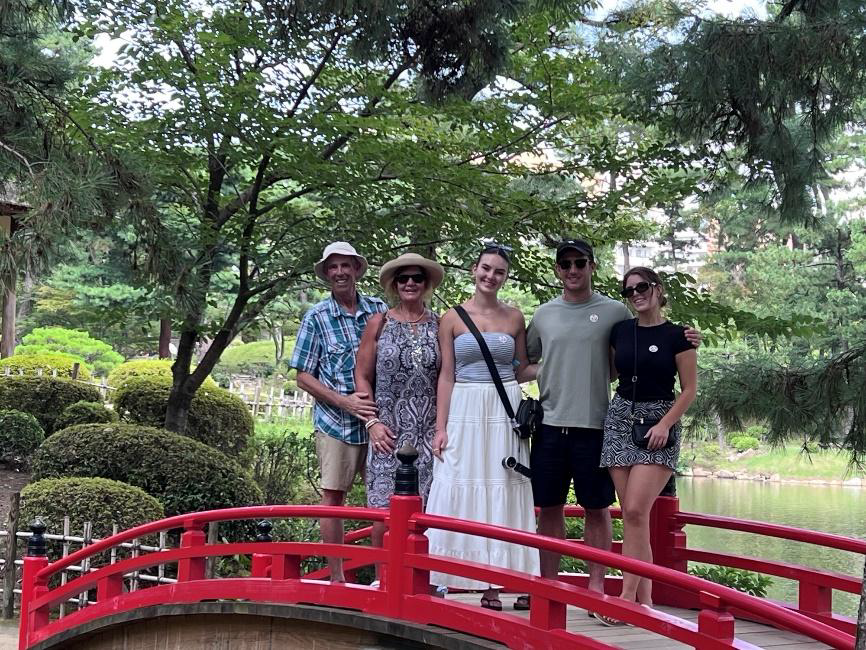
When you run a dog farmstay seven days a week, genuine time off means leaving the country entirely. For Gerry and Sandra Darcy, owners of Bethells Farmstay for Dogs, travel provides the complete break they need from constant availability.
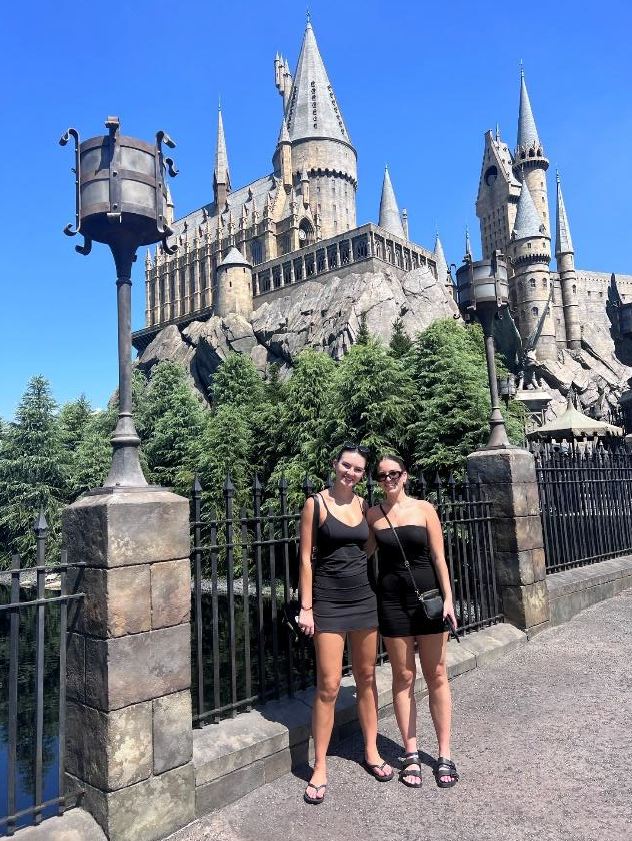
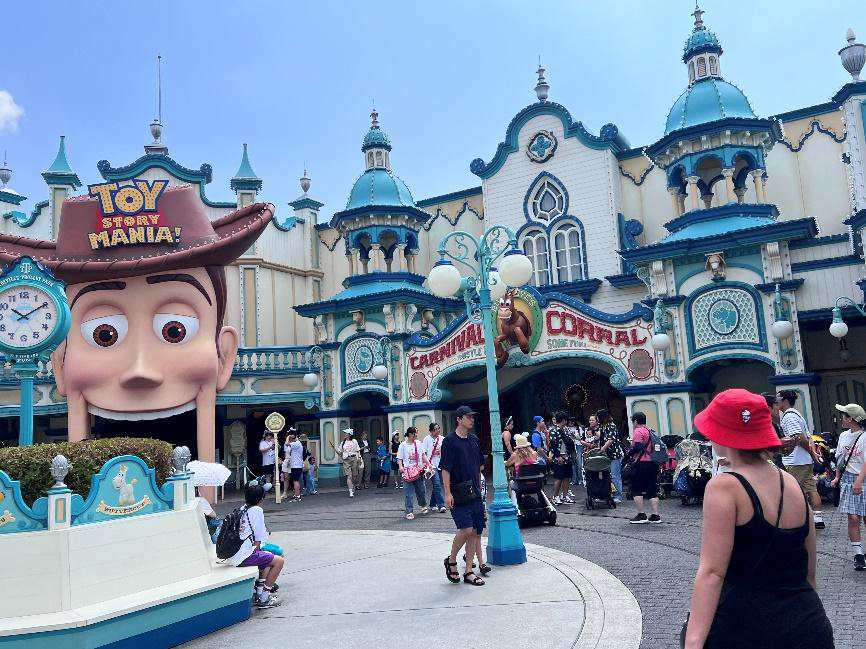
The hour-long queue for Beauty and the Beast didn’t feel like waiting—it felt like walking through a storybook.
From the moment they crossed the bridge into Beast’s courtyard, with its foreboding stone creatures and towering walls, they’d entered another world. The 108-foot castle loomed above them, every architectural detail deliberate, from the gargoyles to the Gothic spires to the way the stonework seemed both elegant and intimidating.
The queue wound through the castle itself, past elaborate tapestries and suits of armour, through corridors lit by flickering torches. Then came the pre-show in a grand hall with a sweeping staircase. The lights dimmed. A stained-glass window illuminated, telling the story of the cursed prince in Japanese.
Then Belle appeared on the balcony—not on screen, but an Audio-Animatronic so lifelike that Sandra thought it was real. Beast appeared opposite. The crowd gasped. He was massive, detailed down to every strand of fur. He roared—not a cartoon roar, but something genuinely frightening. A small child screamed.
“We hadn’t even got on the ride yet and I already had goosebumps.”
The doors opened to Beast’s kitchen, where they boarded enormous teacups—beautifully decorated, with room for ten people in a circle.Their teacup glided into the dining room as “Be Our Guest” began—a fully orchestrated arrangement synchronised perfectly with everything around them. Lumiere conducted from the mantel. Dishes danced through the air. Their teacup spun, tilted, moved in time with the music.
“Ten strangers sitting in a circle, and somehow it felt like being part of a grand performance.”
They swept through the snow-covered gardens for “Something There,” the teacups slowing for the tender moment between Belle and Beast. Then came the hallway—shadows playing on walls, Beast’s roar, Belle’s tears. Then the technical marvel everyone had warned them about.
“I still don’t know how they did it, and I don’t want to—I want to keep the magic”
Beast’s transformation happened in ways that seemed to defy physics. Before they could process it, they swept into the final ballroom—all gold and crystal, with Belle and her Prince dancing in the centre, in human form as “Beauty and the Beast” swelled and their teacup performed one final, gentle dance.
When they emerged into bright sunshine, blinking and dazed, they just stood there.
“Best hour we spent in line.”
The heat, the crowds, the long wait—none of it mattered when weighed against those seven minutes of pure Disney magic, Japanese-style.
“The attention to detail in Japan—even over America—without doubt.”
The family had experienced Disneyland in America before, but Disneyland in Japan left them speechless. The exclusive Beauty and the Beast ride—found nowhere else in the world—was worth the hour-long queue. Though they missed out on some attractions with two-hour waits, the organisation and flow of the parks made every moment feel worthwhile.
“People are courteous and the lines tend to go really quickly.”
What struck the Darcys most was the orderly nature of queuing. Hundreds of people lined up behind simple signs, no one pushed or shoved, and somehow the lines moved faster than expected. Even without English as a first language, staff members were always smiling and helpful.
“When you go on a cruise holiday, you get a snapshot of each place—if you find something really great, you know where to return.”
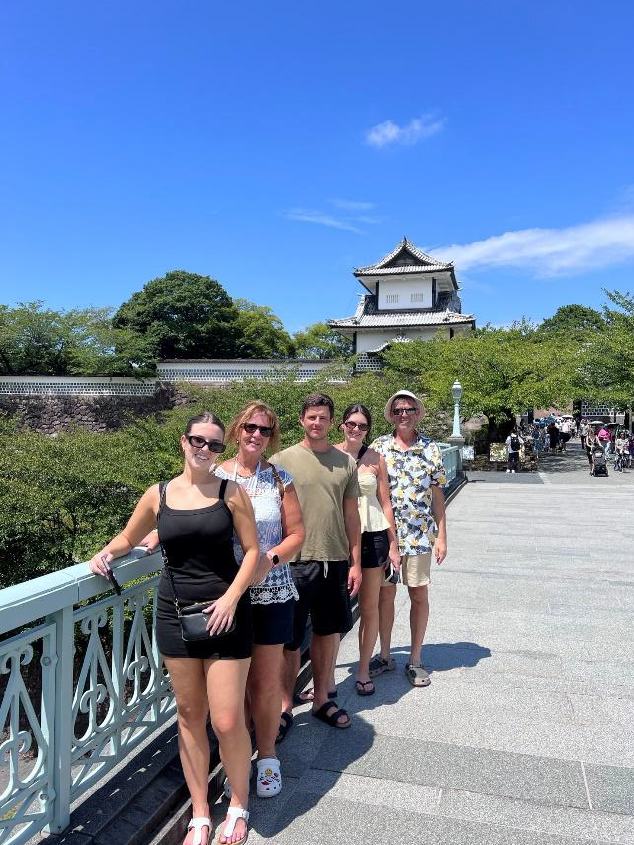
Their 14-day cruise around Japan offered exactly what the Darcys love about cruising: wake up in a new port, explore amazing food and handcrafts, wander through stunning gardens and temples, then return to their floating hotel. No packing and unpacking, no hunting for restaurants, just pure exploration. “We come back more exhausted than when we started, but it’s about adventure and seeing as much as you possibly can.”
“All the food was so fresh—even breakfast was amazing.”
Gerry became a self-proclaimed ramen expert, while Sandra fell in love with dumplings. Their daughter’s enthusiasm for Japanese cuisine led them to authentic restaurants where they discovered breakfast options beyond the standard fare—including big bowls of ramen that felt more like dinner.
“You could order from apps and machines—so convenient.” The ease of ordering via digital kiosks removed language barriers and made trying new foods simple. Combined with using their Wise card for most purchases, the Darcys found Japan surprisingly accessible despite the language difference.
“Our dollar actually goes somewhere—that was a pleasant surprise.”
Value for money surprised the family, particularly when they discovered the nine-level Don Quijote shopping complex open 24 hours, offering passport-holder discounts. At 11pm, it remained packed with tourists hunting for treasures.
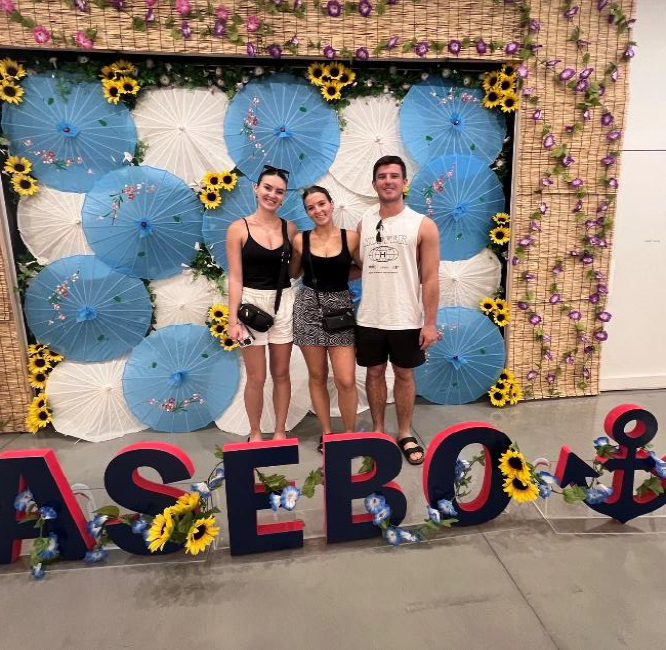
Hiroshima: history that moves you
“Just the significance of what happened—that was pretty mind-blowing.”
While theme parks provided thrills, it was Hiroshima that delivered depth. The memorial museum offered a moving glimpse into history, though the summer holiday crowds meant long waits in the heat. For those who persevered, the experience proved unforgettable.
“Some people from our tour chose not to wait,” Sandra said, “But we’d come all this way.” The wait took nearly an hour, bodies pressed close in the humidity, but no one complained. There was something about the place—even outside—that commanded quiet respect.
When they finally entered, the air conditioning provided immediate relief. But the comfort was fleeting.
The museum started with context—Hiroshima before the war, a bustling city of over 300,000 people. Photos showed children playing in the streets, merchants selling goods, and families going about their ordinary lives. The commercial district that once occupied the space where they now stood had been the beating heart of the city.
Then came August 6, 1945, at 8:15am.
“The belongings left behind—that’s what got to me.”
A child’s tricycle, melted and twisted. The boy who rode it was three years old. A watch, stopped at the exact moment of detonation. A lunch box with carbonised rice still inside—someone’s final meal, never eaten. School uniforms bearing the shadows of the children who wore them, the fabric scorched away everywhere except where their bodies had shielded it.
Sandra found herself reading every placard, looking at every photograph, even though some were almost unbearable. Photos of survivors in the days after, their injuries so severe that it was hard to process they were human beings. Testimonies from those who’d lived through it, describing the heat, the light, the sound, the silence that followed.
“You read about it in history books, but seeing it like this—it’s different.”
The projection mapping showed the bomb’s path, the fireball expanding, the shockwave radiating out. Over 120,000 square metres of the city—gone in an instant. Over 70,000 people dead immediately. By the end of 1945, that number would exceed 140,000.
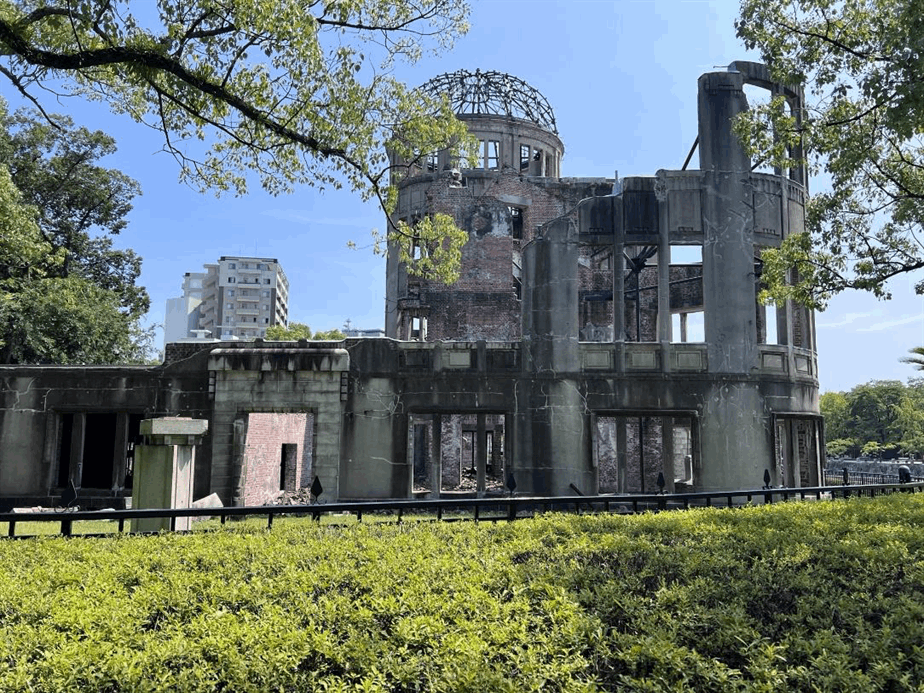
Gerry stood in front of a display showing the Atomic Bomb Dome—the only structure left standing near the epicentre. Originally the Hiroshima Prefectural Industrial Promotion Hall, its skeletal remains had been preserved as a UNESCO World Heritage Site. They’d seen it from outside, but understanding its significance now, knowing it had survived when everything around it vaporised, made it feel different.
The kids moved through more quickly, absorbing what they could before the weight of it became too much. But they came back, drawn to certain exhibits, asking questions in hushed voices.
The final section of the museum focused on nuclear weapons today—how many countries have them, the destructive capacity that now exists, the ongoing push for disarmament. Paper cranes folded by Sadako Sasaki, a girl who developed leukaemia from radiation exposure ten years after the bombing, filled one display. She’d believed that if she folded 1,000 cranes, she’d recover. She folded over 1,400 before she died at age twelve.
“It wasn’t about blame or politics—it was about making sure it never happens again.”
When they emerged back into the heat and brightness of the Peace Park, nobody spoke for a while. They walked along the paths under the trees, past the Cenotaph holding the names of over 220,000 victims, past monuments erected by different nations, all bearing the same message: Never again.
“I’m glad we waited,” Gerry finally said. “That was something everyone should see.”
They’d seen many incredible things in Japan. But Hiroshima was the one that stayed with them differently, a sobering reminder of what humanity was capable of, and why peace mattered.
“The vending machines are brilliant—on every corner with so much variety.”
The abundance of well-stocked vending machines on every corner amazed them. “You wouldn’t have those around New Zealand—they’d be on the back of a truck pretty quickly,” Gerry laughed.
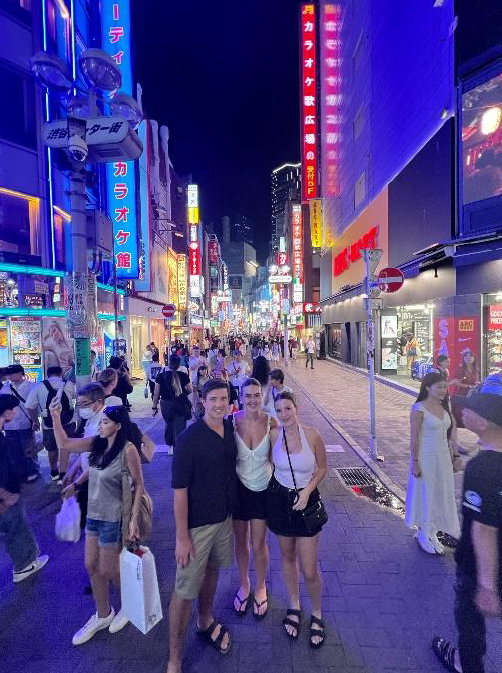
“You could walk anywhere, even at night when it was cooler, and feel completely safe.”
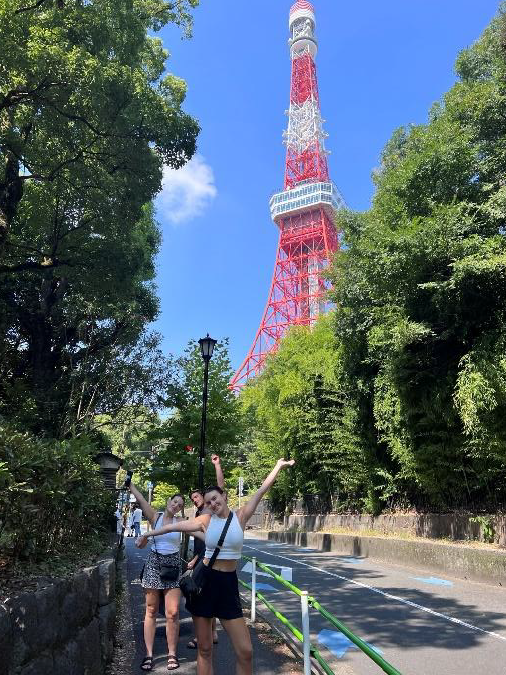
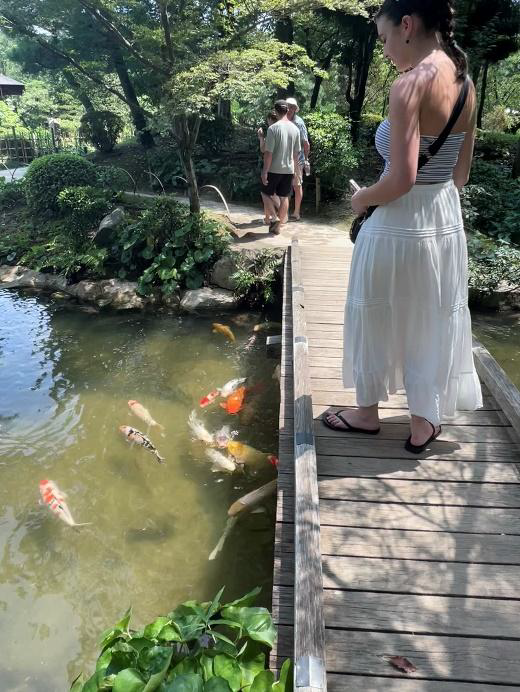
Six days in Tokyo flew by. The Tokyo Tower—which Gerry initially thought might be a cheap imitation—turned out to be spectacular, with stunning views and surprisingly appealing gift shops. Their accommodation near a beautiful temple meant peaceful morning walks through gardens, and the area felt safe even late at night.
“Little dogs in prams everywhere—and a hotel opposite ours was specifically for dogs.”
With five people travelling together in intense heat, Uber became their best friend. The standard app worked perfectly, drivers arrived within minutes in immaculate, air-conditioned cars, and many wore white gloves. The service was impeccable and affordable.
Sumo Wrestling: an evening with champions
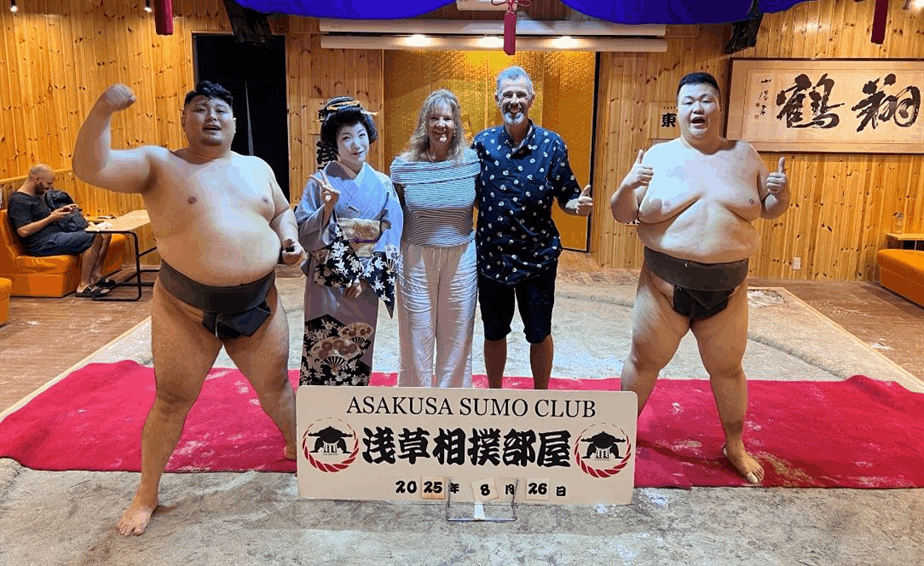
The sumo wrestling venue wasn’t what they expected. Tucked away from the main tourist strips, it felt authentic—a place where locals came to experience tradition, not just pose for photos.
For the first hour, they sat at low tables with small burners in front of them, cooking their own meal while sumo wrestlers moved through the space. These were athletes who consumed 10,000 calories a day, whose training regimen would break most people within a week.
“They showed us the exercises, explained the diet, and you could see the discipline required.”
The wrestlers demonstrated their warm-up routines, each movement precise and powerful. They explained their chanko-nabe diet—the protein-rich stew that fuels their massive frames. Sandra and Gerry listened , fascinated, as the wrestlers described waking at 5am for training, eating their first enormous meal mid-morning, then napping to help their bodies absorb the calories.
Then came the invitation.
“Who wants to challenge a sumo wrestler?”
Four men from the audience stood up. The first three were clearly gym-goers—fit, confident, probably thinking their CrossFit training gave them a chance. The fourth was a bit of a larrikin, playing to the crowd.
The first challenger stepped into the ring. Within seconds, he was on the ground. The wrestler hadn’t even looked like he’d tried.
The second challenger lasted maybe three seconds longer. Same result.
The third man took a different approach—tried to stay low, use his centre of gravity. The wrestler simply placed one enormous hand on the man’s shoulder and pushed. Down he went.
“The fourth bloke had a real crack at it, and you could see he immediately regretted his decision.”
This challenger actually tried to tackle the wrestler properly. There was a brief moment where it looked like he might hold his own. Then the wrestler shifted his weight, wrapped his arms around the challenger, and lifted him like he weighed nothing. The wrestler placed him back down—gently, respectfully—and the challenger limped back to his seat, laughing but clearly feeling it. “His mates were giving him grief for the rest of the night.”
The wrestlers then faced each other, and the Darcys witnessed the real thing. The sound of impact, the speed despite their size, the technique behind every move. It lasted less than ten seconds, but those ten seconds made everything make sense.
“Definitely worth seeing—one of the best nights we had.”
Two hours of food, culture, and entertainment. The kids were already rewatching the videos on their phones, laughing at the challenges, marvelling at the real wrestlers’ skill.
“Apparently, you don’t eat while you walk, and when you take food from someone, you do it with both hands.”
Japanese customs around food fascinated the family. The tradition of sitting down to enjoy meals rather than eating on the go made sense in the August heat—air conditioning was always welcome.
“Personal space is different—you’re right next to someone at a restaurant, and everyone’s happy.” At busy restaurants, diners sat elbow-to-elbow at bars, yet everyone remained courteous and content. The famous Shibuya Crossing—busier than any intersection in New York—showcased orderly chaos at its finest.
What the Darcy’s would do differently
“Get an international driver’s licence—those Super Mario Karts looked amazing.”
The one regret? Not getting an international driver’s licence before leaving New Zealand. Watching people dressed as Super Mario characters zipping around Tokyo in go-karts through the famous Shibuya Crossing looked like an incredible experience they’d missed.
Travel tips for your Japanese experience
1. Avoid August unless you love extreme heat. Many clients who visit during Japan’s winter for skiing report it’s spectacular.
2. Bring or buy an umbrella, not just a hat. The August sun is relentless.
3. Organise transfers in advance. Having a driver waiting with your name, ready to handle luggage and whisk you to air-conditioned comfort, is worth every cent.
4. Take your passport everywhere. Many shops offer tourist discounts when you show it.
5. Don’t skip South Korea. If you’ve come all that way, the DMZ tour offers fascinating history—tunnels dug by North Koreans, lookouts over North Korea, and stories that bring recent history to life.
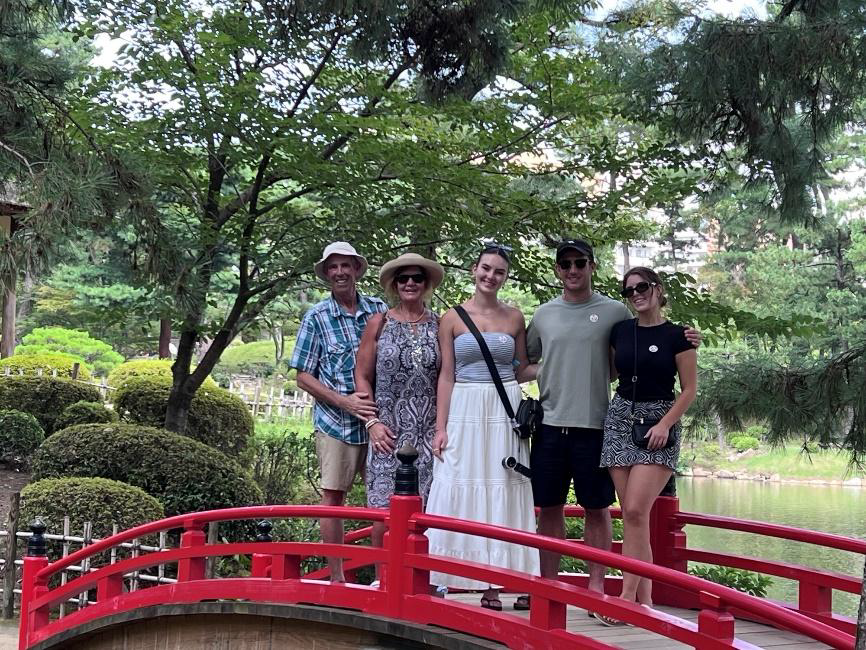
While the heat occasionally sent some family members back to air conditioning while others shopped, the Darcys spent most of their time together. Trying different foods, experiencing pachinko parlours and claw games, exploring temples and theme parks—the shared experiences strengthened bonds already strong.
”The children rated our China, Japan, and South Korea holiday as one of the best we’ve ever done.” “Why cruising? Because you don’t have to pack your bags, you just settle in.”
After trying their first cruise to Hawaii ten years ago—initially thinking “cruises are for old people”—the Darcys are now up to about 17 cruises. They’ve discovered cruising’s genius: travel at night, wake up in a new country, explore all day, return to your floating hotel with a balcony. No restaurant hunting, evening shows included, and the ability to cherry-pick the best of each destination.
About Bethells Farmstay for Dogs
With over 18 years of family-owned operation, Bethells Farmstay for Dogs allows other families to enjoy their own adventures worry-free. Gerry and Sandra, who’ve had involvement with dogs most of their lives and specialised in greyhounds and rough coat collies, created the facility they’d want for their own pets—now including one Pug and two Pug/Griffons.
“When owners are overseas enjoying their holidays, they can see their dogs having great holidays here on Facebook.”
During busy periods, they care for up to 60 dogs, separating guests into two groups—small, medium, geriatrics, and gentle giants in one area, high-energy dogs in another. All enjoy free-range access to paddocks, daily trips to the waterhole, and even a newly heated swimming pool for smaller dogs (lifeguard on duty, of course).
“We decided to make a facility we’d be happy to leave our own dogs in,” Sandra explains. “Limited numbers, socialisation, lots of cuddles, and stimulation make it the best experience.”
In conversations with clients, once they hear about a holiday destination being amazing three or four times, they add it to their list.
Ready for your own adventure?
“Since we’ve come across professional travel planning, it’s something I don’t want to do without.”
The Darcys discovered that while the internet might make DIY travel seem easy, there’s a point where professional expertise transforms a good holiday into an extraordinary one. From fast passes that save hours in queues to transfers that eliminate stress, to having someone available by phone halfway around the world when you need them—these touches created memories rather than headaches.
Travel isn’t about the cheapest price tag. It’s about the stories you’ll tell, the experiences you’ll share, and the memories that keep you going through another seven-day work week.
Contact Rohan Dhamija at Helloworld Travel Ponsonby to start planning your own story worth telling.
The best holidays aren’t measured in dollars saved, but in moments gained.
« Back